
Tree work is dangerous without proper training and equipment. A professional tree company has the knowledge, tools, and insurance to get the work done right - and safely. You’ll save time, reduce risks, and be certain the work is done right.
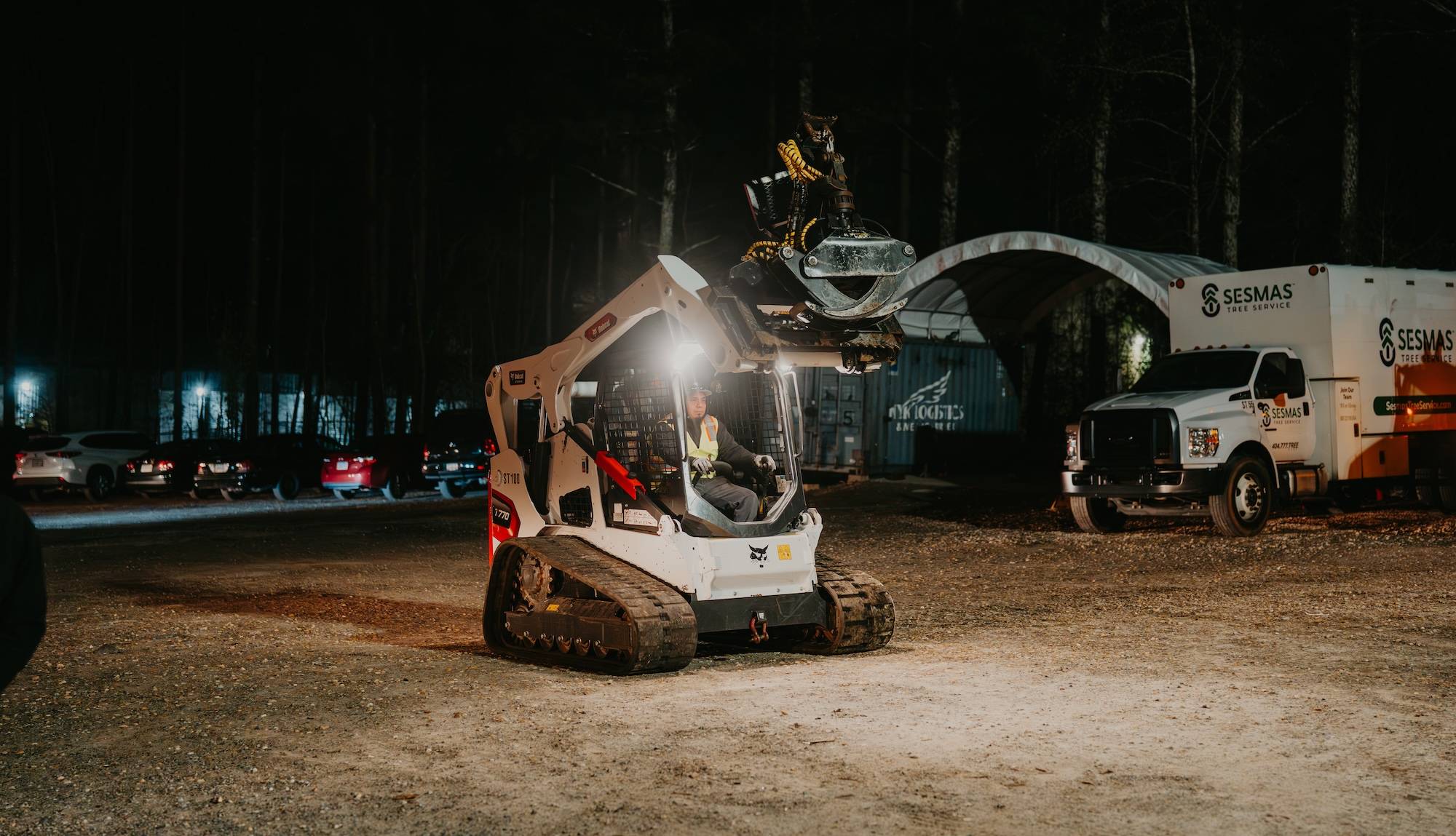
Rock Hill combines established neighborhoods, newer developments, and properties that back up to wooded areas or open land. The wide variety creates very different tree conditions depending on where a home sits. Sesmas Tree Service offers professional tree removal service in Rock Hill. Below, we'll walk through how terrain and tree placement factor into removal work across this area.
Rock Hill sits where the Piedmont region transitions into rolling terrain with pockets of clay soil, exposed rock, and drainage channels that shift water flow after storms. A tree that looks secure on flat ground may have compromised roots on a slope where water runs off. Clay holds moisture longer than sandy soil, which can cause root rot in low spots. Exposed rock limits how deep roots penetrate, leaving taller trees vulnerable during high winds.
An arborist checks the base of the trunk for signs of instability before recommending removal. Cracks in the soil around the root flare, exposed roots on one side, or a visible lean all point to structural problems. Trees on slopes lean downhill over time as gravity pulls on the crown and soil erodes beneath the roots. A tree that tilts more than 15 degrees from vertical usually can't be saved and poses a hazard if it's close to a structure or driveway.
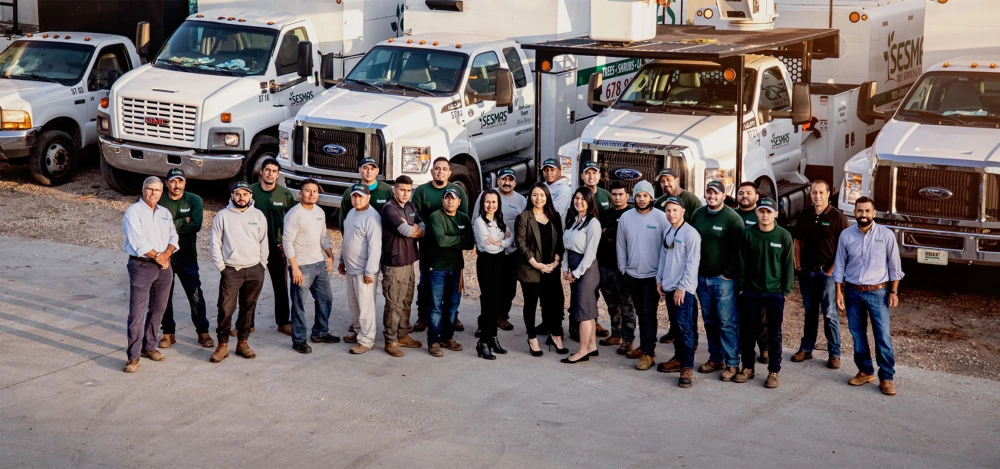
When it comes to caring for your trees, you need a team you can rely on. Sesmas Tree Service is committed to safe work practices, honest pricing, and dependable service from start to finish. Here’s what sets us apart.

Storm damage or unexpected tree issues? We offer fast, reliable emergency tree services when you need them most.

As a local business, we care about our community and treat every property with the respect it deserves.

From trimming and pruning to removal and cleanup, we handle all aspects of tree care with expertise.

No hidden fees or surprises—just fair, transparent pricing for quality tree care services.

Our skilled team has years of hands-on experience handling trees of all sizes safely and efficiently.

Every job is performed with strict safety measures to protect your property, our team, and the surrounding area.
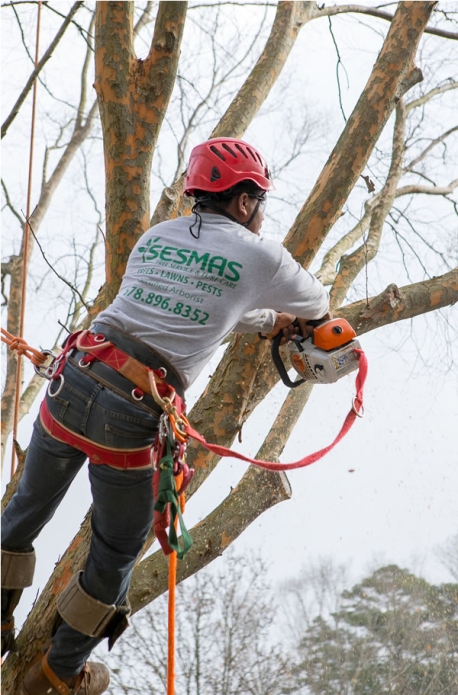
Terrain also dictates equipment access. A steep grade or wet ground limits where a crane or truck can park, so the tree company in Rock Hill maps out access points before starting work. Removing a tree from a hillside requires rigging to control each section as it's cut, to prevent pieces from rolling or sliding into fences, decks, or neighboring yards.
Properties that border creeks or drainage swales deal with fluctuating water levels that weaken roots. A tree may survive dry months but fail during a wet season when saturated soil can't anchor the root plate. Roots in these zones grow shallow and spread wide instead of driving deep, which reduces stability. Willows, river birch, and some maples thrive in wet areas but still need monitoring. Hardwoods like oaks don't tolerate prolonged saturation and show stress through dieback in the crown or fungal growth at the base.
Slopes near creeks erode faster than flat ground, exposing roots and creating voids beneath the trunk. Once a root system loses contact with the soil on one side, the tree starts tipping. Emergency tree removal in Rock Hill becomes necessary when a leaning tree threatens a home, utility line, or road access. Heavy rain accelerates the process, so a tree that looked stable in summer can fail after a winter storm.
A tree service in Rock Hill will inspect these areas before wet weather arrives. Early removal prevents damage and reduces the risk of a tree blocking a drainage channel, which can redirect water toward foundations or driveways.
A tree that's within 20 feet of a structure requires precision rigging and controlled lowering. The crew can't drop sections freely because even small branches can damage siding, gutters, or windows. Ropes, pulleys, and a crane or bucket truck guide each piece to the ground in a clear drop zone. Tree removal in Rock Hill near homes takes longer than removing a tree in an open yard, but controlled cuts eliminate the risk of property damage.
Driveways add another layer of complexity. Concrete and asphalt crack under impact, so the team sets up protective mats before moving equipment across paved surfaces. Root systems can also extend under driveways, so grinding the stump can leave a void that causes settling. A tree company fills the hole with soil or grinds the stump below grade to prevent sinking.
Overhead clearance matters too. A tree with branches over a roof or power line requires careful sectioning to avoid pulling wires or damaging shingles. The crew removes limbs first, then takes down the trunk in short sections. Tree trimming and tree pruning reduce hazards before a tree reaches the point where removal becomes the only option.
Trees near roads or utility easements require permits and coordination with local authorities. A tree company in Rock Hill can help pull the necessary paperwork before starting work on public property or within the right-of-way. Removing a tree that overhangs a road involves lane closures and traffic control, especially on busier streets. The crew can schedule work during off-peak hours to minimize disruption.
Utility lines complicate tree cutting because power, cable, and phone lines run through the canopy in older neighborhoods. The utility company de-energizes lines or provides clearance before the tree service begins removal. Cutting near live wires without coordination can cause outages, injuries, or fatalities. A certified arborist identifies which lines need clearance and contacts the providers directly.
Trees growing under or near power lines also need ongoing maintenance. Pruning keeps branches away from conductors, but a tree that's too close or growing too fast may need full removal to protect infrastructure. Roots can damage underground utilities, so the crew locates buried lines before grinding stumps or digging near the base.
Cleanup begins with hauling wood, branches, and debris off the property. The crew loads everything into a truck or chipper so the yard is clear of organic material. Chips from the trunk and limbs can be left for mulch or hauled away, depending on the property owner's preference.
Stump grinding is the final step. The grinder reduces the stump to chips several inches below ground level, allowing grass or landscaping to grow over the area. Grinding also eliminates tripping hazards and prevents new shoots from sprouting. The crew rakes chips into the hole left by the stump, then covers the area with topsoil if requested. A final walkthrough checks for missed debris. The team removes protective coverings from driveways or patios. Tree removal should leave the property ready for new landscaping or construction without lingering damage.
Rock Hill's mix of terrain and development patterns means every tree removal project requires site-specific planning. Contact Sesmas Tree Service for an assessment. We offer everything from emergency tree removal in Rock Hill to routine tree service in Rock Hill and surrounding neighborhoods.
info@sesmastreeservice.com
Tree work is dangerous without proper training and equipment. A professional tree company has the knowledge, tools, and insurance to get the work done right - and safely. You’ll save time, reduce risks, and be certain the work is done right.
Stay updated with the latest tips, trends, and insights from Sesmas. Explore expert advice on tree care, safety, and maintenance to keep your landscape healthy and beautiful year-round.
View All
As a homeowner, dealing with pest infestations can be stressful and expensive. This is particularly true if you are looking to…
Read More
When it comes to enhancing property value, many people often focus on flooring, bathrooms, kitchens, and interior floors. However, many do…
Read More
Trees are essential to our landscapes and the environment. These magnificent entities provide us with clean air, shade, a habitat for…
Read More
As a homeowner, dealing with a fallen or cut branches in your backyard can be frustrating and stressful, particularly if you…
Read More